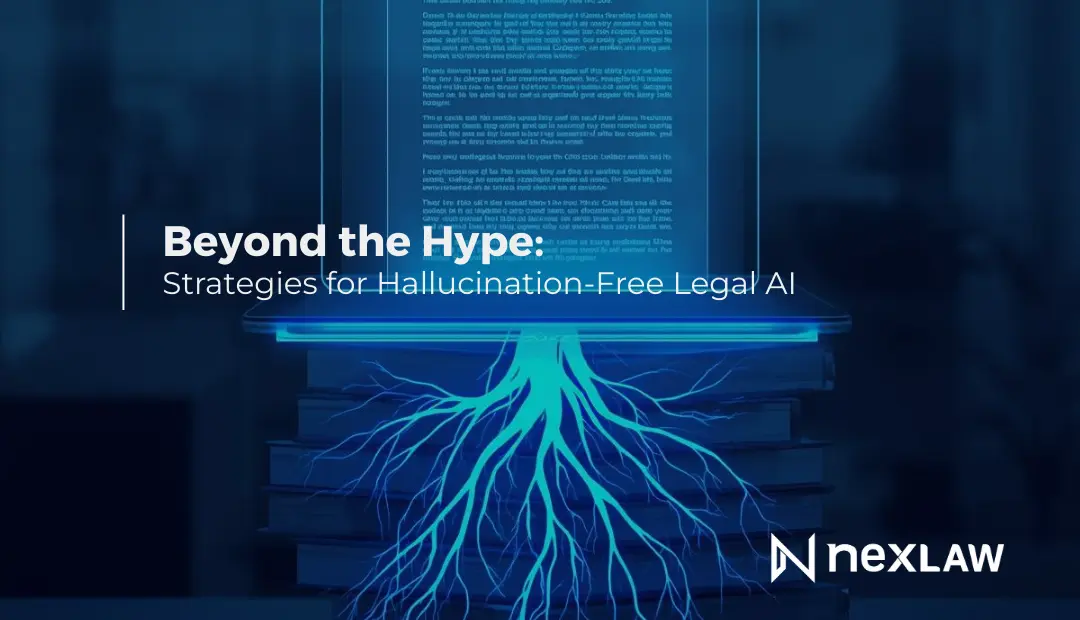
Beyond the Hype: Strategies for Hallucination-Free Legal AI
As we navigate the legal landscape of 2026, the initial “gold rush” of artificial intelligence has matured into a focused pursuit of reliability. For U.S. attorneys, the primary hurdle to adoption has been the “hallucination”—the tendency of general AI models to fabricate non-existent case law with startling confidence. In a profession where a single incorrect citation can lead to courtroom sanctions or a lost case, hallucination-free Legal AI is no longer a luxury; it is the industry standard.
The transition to AI reliability in law is driven by a move away from generic chatbots toward specialized, legal AI systems that prioritize “verifiable truth” over “plausible text.”
The Anatomy of a Hallucination: Why General AI Fails
General-purpose Large Language Models (LLMs) are designed to predict the next likely word in a sequence. While this makes them excellent at writing emails or summarizing creative briefs, it makes them dangerous for legal research. Without specific guardrails, an LLM might “hallucinate” a perfect-sounding precedent because its mathematical model suggests that such a case should exist, even if it doesn’t.
Modern verified legal citations are achieved through an architecture known as Retrieval-Augmented Generation (RAG).
Standard LLM: Generates responses based purely on internal training data (Memory-based).
RAG-based Legal AI: First searches a closed database of primary law (Retrieval), then summarizes that specific data (Generation). This “grounds” the AI in reality, ensuring it only speaks about what it can find in the books.
Best Practices for Ensuring AI Reliability
To achieve the 99% hallucination-free performance expected by modern firms, legal teams must implement a “Human-in-the-Loop” workflow. Following these legal AI best practices ensures that the technology serves as a powerful assistant rather than a liability:
Demand Direct-to-Source Linking: Never trust an AI summary that doesn’t provide a direct hyperlink to the original PDF or court transcript. The most reliable AI legal research tools allow you to click a citation and instantly view the page where the quote originated.
Utilize Jurisdiction Filters: Hallucinations often occur when AI blends legal standards from different states. By setting strict jurisdictional guardrails, you ensure the AI only retrieves authorities that are mandatory or persuasive in your specific court.
Cross-Examine the Output: If an AI suggests a case you’ve never heard of, use a secondary search to confirm its current status. High-end tools now include “Shepardizing-style” alerts that flag whether a case has been distinguished or overturned.
Adopt a Verification Checklist: Just as you would review the work of a first-year associate, every AI-generated brief should pass through a mandatory verification stage.
This approach is detailed in our internal Checklist for Using AI Responsibly, which aligns with the 2026 updates to the ABA Model Rules regarding technological competence.
The 2026 Ethical Standard: Verifiable Results
The legal community’s shift toward secure legal tech has changed the nature of “due diligence.” Judges are increasingly adding “AI disclosure” requirements to their standing orders, requiring lawyers to certify that they have manually verified every citation in a filing.
Using a platform that guarantees verified legal citations isn’t just about saving time; it’s about protecting your license. When the AI is built on a closed loop of primary authorities—statutes, regulations, and case law—the risk of “fictional” law drops significantly.
Conclusion: Trust, but Verify
In 2026, the goal is not to eliminate the lawyer, but to eliminate the manual drudgery of the first pass of research. By moving to hallucination-free legal AI, firms can redirect their energy toward high-level strategy and client advocacy.
To understand how these safeguards are built into your daily practice, explore our comprehensive guide on Legal AI Software for Lawyers or see how AI assistants reduce document review time without sacrificing accuracy. For a hands-on look at a 99% hallucination-free environment, you can schedule a technical demo here.