NexLaw vs Matey:
Full Criminal Defense Litigation OS vs. Discovery-Only Transcription Tool
Matey.ai is a discovery transcription tool. It converts audio and video files to searchable, timestamped text. Transcription is the easy part. What happens after the transcript — the suppression motion research, the constitutional precedent analysis, the motion drafting, the trial preparation, the live hearing — is where the case is actually won or lost. Matey is not there for any of that.
NexLaw handles the full Criminal Defense lifecycle from discovery through courtroom at $4,200/year flat, with verified citation suppression research and a live Courtroom Assistant operating in real time during hearings.
Feature Comparison Matrix
Why Is Transcription the Easy Part of Criminal Defense?
Matey.ai converts audio and video discovery files — body camera footage, recorded interrogations, wiretap recordings, jail calls, surveillance video — to searchable, timestamped transcripts. For criminal defense attorneys receiving hundreds of gigabytes of media discovery, that capability has genuine value. That is where Matey’s workflow ends.
The transcript does not identify the constitutional violation embedded in the officer’s conduct. It does not research the Fourth Amendment precedent in your jurisdiction. It does not draft the motion. It does not prepare your cross-examination outline. It does not help you during the hearing when the prosecutor makes an argument you did not anticipate.
Matey solved the transcription problem. It did not solve the litigation problem. NexLaw solves the litigation.
How Does NexLaw Build a Suppression Motion From a Discovery Transcript?
What Constitutional Violations Does NexLaw Identify From Body Camera Transcripts?
When you upload a body camera transcript to NexLaw, NeXa reads it as a defense attorney reads it — scanning for constitutional violations, comparing officer conduct against established Fourth Amendment standards, and identifying suppression grounds. It then researches those grounds against verified case law from your specific jurisdiction and produces a citation-anchored motion draft where every legal proposition traces to a verifiable case.
A suppression motion that cites a case that does not exist is not a recoverable error. It is a sanctions risk, a bar complaint, and an ineffective assistance of counsel exposure. NexLaw’s system does not generate a citation it cannot verify. If the authority does not exist in the verified database, the system does not manufacture it.
See How Top Firms Use Nexlaw to Win Faster and Smarter
Discover how legal professionals transform their practice with NexLaw AI. Real stories, measurable results.
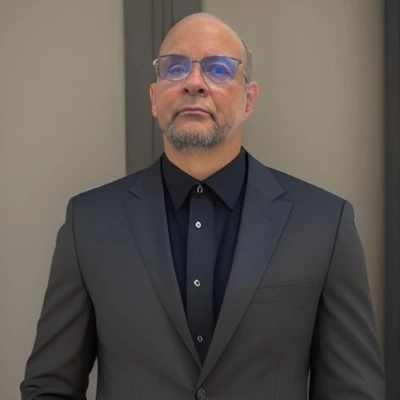
Edward Mark Chavez,
Attorney
EMC Law
Redefining Trial Preparation and Workflow Efficiency at EMC Law
How Attorney Edward Chavez leverages NexLaw to gain strategic control and evidentiary precision over complex cases.
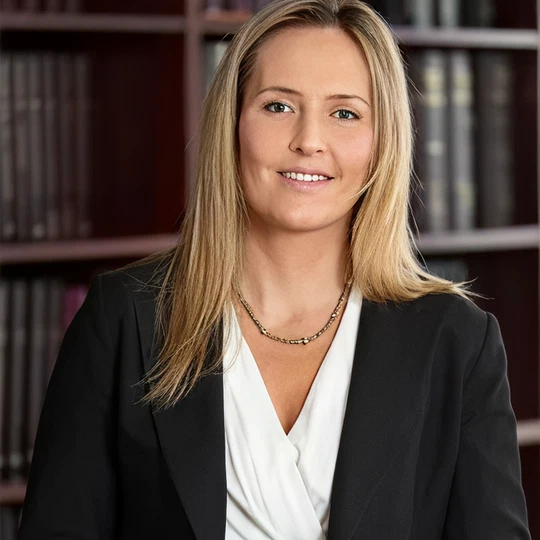
Amanda L. Perry
Partner
Resnick & Louis, P.C
From Seven-Figure Wins to Family Legacies
Why Amanda L. Perry recommends NexLaw to the next generation of Litigators.
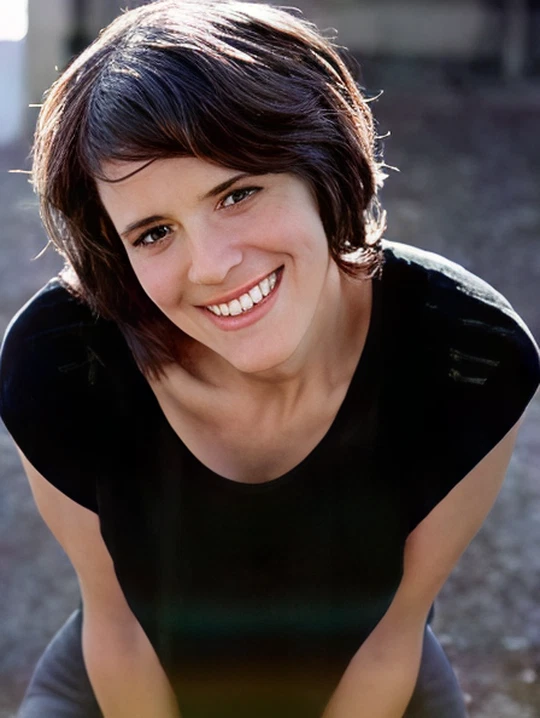
Emily C. Marx
Certified Family Law Specialist (CFLS)
Law Office of Emily C. Marx, PC
Precision in High-Conflict Litigation
Why a California Family Law specialist committed to a 5-year partnership with NexLaw
What Happens When the Hearing Starts and Matey Goes Dark?
Matey’s contribution to your case ended when it produced the transcript. It has no courtroom presence. NexLaw’s Courtroom Assistant operates in real time during hearings and trial. It runs on your phone or tablet. When a witness says something that contradicts a prior statement in your uploaded discovery materials, it surfaces the contradiction and the exact location in the record. When opposing counsel makes a legal argument, it retrieves relevant counter-authority from verified case law. When you need the precise timestamp from the body camera footage to impeach the officer’s testimony, it returns the reference before the witness finishes speaking.
For a criminal defense attorney handling a suppression hearing alone — which describes the vast majority of boutique and solo criminal defense practice — the Courtroom Assistant is the difference between having a research partner in the room and not having one. Matey cannot be in the room with you. NexLaw can.
What Litigator Say About Our Legal AI Assistant
Hear what professionals are saying about our Legal AI Assistant and how it supports their work

" It is good. It's a strong product that's very focused on legal research. It's more legally accurate than ChatGPT or Gemini - NexLaw usually gets citations right and summarizes cases correctly. "

Run a Live Accuracy Test on Your Next Demand Letter
Upload a real medical record from an active PI or MedMal matter. Run ChronoVault against it.
See what a court-ready chronology looks like when it takes 15 minutes instead of 45 hours.
FAQ
Frequently Asked Questions
Explore answers to frequently asked questions about Nexlaw
What is the difference between NexLaw and Matey for criminal defense attorneys?
Matey.ai transcribes discovery audio and video into searchable, timestamped text. NexLaw covers the full criminal defense lifecycle: discovery transcription, constitutional violation identification, suppression motion research with verified citations across all 50 states and federal circuits, motion drafting, cross-examination outlines, trial preparation strategy, and a live AI assistant during hearings and trial. An attorney using Matey still needs separate tools for every stage after transcription. NexLaw replaces the entire stack at $4,200/year flat.
Does Matey.ai help with suppression motions?
No. Suppression motion research, drafting, and argument construction are not documented features of Matey.ai. Matey converts media discovery files to searchable transcripts. Everything after the transcript — identifying the constitutional violation, researching controlling authority, drafting the motion — is the attorney’s responsibility using separate tools. NexLaw’s NeXa module identifies suppression grounds from uploaded discovery, researches verified precedent in the relevant jurisdiction, and produces a citation-anchored motion draft
Does Matey.ai provide any assistance during live court proceedings?
No. Matey’s function is pre-hearing document preparation. It does not operate during live proceedings. NexLaw’s Courtroom Assistant operates in real time during suppression hearings and trial — surfacing contradictions between live testimony and the discovery record, retrieving verified counter-authority in response to opposing counsel’s arguments, and returning exact timestamp references from body camera footage on demand.
How does NexLaw prevent hallucinated citations in criminal defense suppression motions?
NexLaw uses a Verified Law architecture. Every case citation in a NexLaw suppression motion draft traces to a verified case in the system’s legal database. The system does not generate a citation it cannot verify. If the authority cannot be confirmed, NexLaw identifies the gap and provides the closest verified analogous authority instead. Christian T. Balducci of Marquis Aurbach Coffing confirmed NexLaw is more legally accurate than ChatGPT or Gemini under real working conditions. A fabricated citation in a suppression motion creates sanctions exposure and ineffective assistance risk — NexLaw’s architecture makes that outcome structurally impossible.
What is NexLaw’s flat pricing for criminal defense attorneys and what does it replace?
NexLaw Essential is $3,000/year. NexLaw Professional is $4,200/year. Both are flat rates with no usage limits or seat minimums. For a criminal defense attorney currently using Matey for transcription, the relevant comparison is not Matey’s price in isolation — it is Matey’s price plus your legal research platform, plus your motion drafting tool, plus your trial preparation workflow, plus your in-court reference method. NexLaw replaces all of those at one flat price, published without a sales call.