NexLaw vs. Supio:
PI Firm Pricing, Features & ROI Compared (2026)
Supio is a VC-funded AI platform ($60M raised, Thomson Reuters distribution partnership) that does not publish pricing for PI firms based on its public website as of June 2026.
NexLaw is an independently funded Litigation OS at $4,200/year flat rate, publicly listed, covering the full PI and MedMal workflow from medical record extraction through trial preparation. Amanda L. Perry of Resnick & Louis, P.C. used NexLaw on a high-stakes document-intensive matter and achieved a million-dollar verdict. NexLaw’s platform metrics document 80% reduction in research time and 20+ hours saved per week on automated tasks.
Feature Comparison Matrix
The Structural Observation on VC-Funded Pricing
There is a reason Supio does not publish pricing. It is that their pricing architecture was not designed for the economics of a boutique PI firm. These are structural facts based on publicly available information:
- Supio has raised approximately $60 million in venture capital, based on publicly reported rounds.
- Supio operates a distribution partnership with Thomson Reuters, one of the largest legal information companies in the world.
- Supio’s public website directs prospective customers to a sales engagement before disclosing pricing.
The absence of a public price is, itself, information. For a managing partner at a boutique PI firm, it means you cannot run a cost-benefit analysis without investing attorney time in a sales process first.
NexLaw: $3,000/year (Essential). $4,200/year (Professional). On the pricing page. No call required. For a firm billing at $450/hour, recovering NexLaw’s annual cost requires fewer than ten recovered billable hours. NexLaw’s platform metrics indicate 20+ hours saved per week.
How Does NexLaw’s PI Workflow Compare to Supio’s Point Solution?
Supio’s core documented capability is AI-powered medical record summarization. For the specific task of processing raw medical records, they have built a focused tool. The question is what your PI workflow requires beyond that one stage.
A PI case does not begin with a medical record and end with a summary.
It begins with intake triage. It moves through record collection, chronology construction, legal research, demand letter drafting, expert witness coordination, motion practice, and trial preparation. Supio addresses one stage. NexLaw addresses the full lifecycle.
What Does ChronoVault Produce That Medical Record Summarization Does Not?
A summary tells you what happened. A court-ready chronology tells you what happened, when, in what clinical sequence, anchored to the exact page in the source record where each entry appears. ChronoVault also performs ICD-10 code mapping across the full record set and detects standard of care gaps — neither of which is documented as a native Supio feature.
See How Top Firms Use Nexlaw to Win Faster and Smarter
Discover how legal professionals transform their practice with NexLaw AI. Real stories, measurable results.
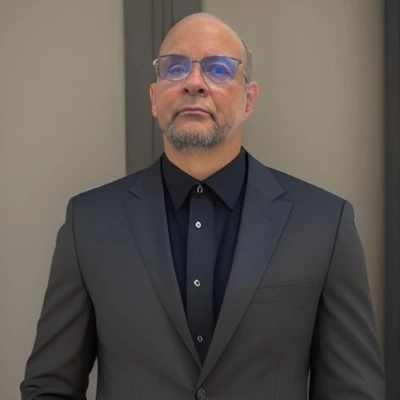
Edward Mark Chavez,
Attorney
EMC Law
Redefining Trial Preparation and Workflow Efficiency at EMC Law
How Attorney Edward Chavez leverages NexLaw to gain strategic control and evidentiary precision over complex cases.
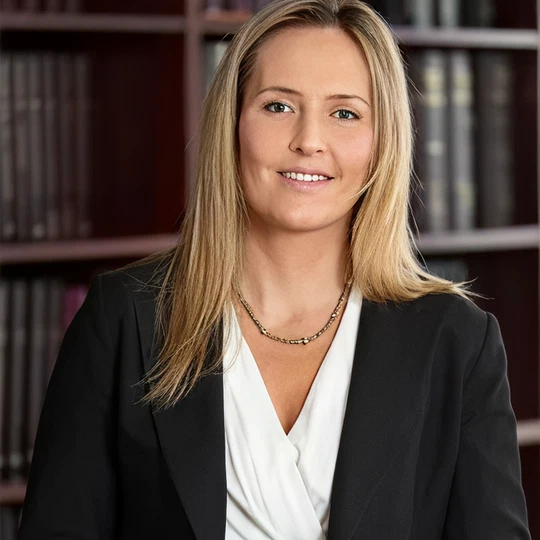
Amanda L. Perry
Partner
Resnick & Louis, P.C
From Seven-Figure Wins to Family Legacies
Why Amanda L. Perry recommends NexLaw to the next generation of Litigators.

Emily C. Marx
Certified Family Law Specialist (CFLS)
Law Office of Emily C. Marx, PC
Precision in High-Conflict Litigation
Why a California Family Law specialist committed to a 5-year partnership with NexLaw
Does Supio Provide Verified Citation Legal Research for PI Demand Letters?
Legal research with verified citations is not a stated feature of Supio’s platform. NexLaw’s NeXa module handles verified citation research across 50 states and federal circuits. Every case cited in a NexLaw output is verifiable against the database. Christian T. Balducci of Marquis Aurbach Coffing observed: “It’s more legally accurate than ChatGPT or Gemini.”
What Litigator Say About Our Legal AI Assistant
Hear what professionals are saying about our Legal AI Assistant and how it supports their work

" It is good. It's a strong product that's very focused on legal research. It's more legally accurate than ChatGPT or Gemini - NexLaw usually gets citations right and summarizes cases correctly. "

Test Your Own File
Upload a real medical record from an active PI or MedMal matter. Run ChronoVault against it.
See what a court-ready chronology looks like when it takes 15 minutes instead of 45 hours.
FAQ
Frequently Asked Questions
Explore answers to frequently asked questions about Nexlaw
Does Supio publish pricing for PI law firms?
No. Based on Supio’s public website as of June 2026, pricing is not disclosed without a sales engagement. Supio has raised approximately $60 million in venture capital and operates a distribution partnership with Thomson Reuters — a business model typically aligned with enterprise contract minimums, not boutique PI firm budgets. NexLaw publishes $3,000/year (Essential) and $4,200/year (Professional) openly, without a call.
How much has Supio raised in venture capital, and why does it affect pricing?
Supio has raised approximately $60 million in venture capital based on publicly reported rounds, and has a Thomson Reuters distribution partnership. Venture-funded platforms at this stage typically require pricing structures that satisfy investor return expectations — enterprise contracts with seat minimums. NexLaw is independently funded. There are no investor return targets in our pricing architecture.
Can Supio detect standard of care gaps for MedMal cases?
Standard of care gap detection — automatically identifying deviations between documented treatment decisions and the clinical sequence visible in the medical record — is not documented as a native feature of Supio’s platform based on their public documentation. NexLaw’s ChronoVault performs this natively, flagging gaps before you retain an expert witness. Amanda L. Perry at Resnick & Louis used this capability on a high-stakes MedMal matter and achieved a million-dollar verdict.
Does NexLaw handle the full PI workflow beyond medical records?
Yes. NexLaw covers the complete PI and MedMal lifecycle: intake triage, AI medical record chronology (ChronoVault), verified citation legal research (NeXa), demand letter generation, trial preparation strategy (CasePrep), and live courtroom AI assistance. Supio’s publicly documented primary capability is medical record summarization. Legal research, demand letter drafting, and trial preparation are not stated features of their platform.